Difference Between NT Scan Vs Anomaly Scan Explained by Experts
OnePLUS Ultrasound Lab2026-05-15T05:52:53+00:00Pregnancy brings excitement, curiosity, and honestly, a surprising number of medical scans with complicated names. Many parents hear terms like NT scan and anomaly scan during doctor visits and immediately start wondering if they accidentally joined a medical entrance exam.
Understanding the difference between nt scan vs anomaly scan helps parents stay informed and prepared during pregnancy. Both scans play important roles in prenatal care, but they serve different purposes and happen at different stages of pregnancy.
Doctors often recommend these scans at trusted facilities like an ultrasound lab in Rohini to monitor baby development, maternal health, and pregnancy progress carefully. Accurate screening helps doctors identify possible concerns early and supports safer pregnancy management.
And no, these scans are not “extra formalities.” They actually provide valuable insights into fetal health.
What Is an NT Scan?
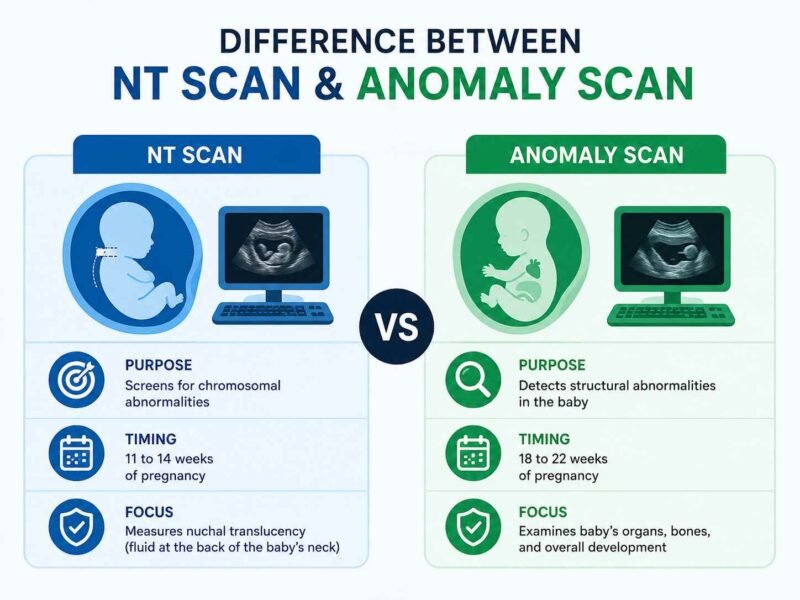
NT Scan is a prenatal screening test usually performed during the first trimester.
Doctors generally conduct this scan between:
- 11 weeks
- 13 weeks + 6 days
The scan measures fluid accumulation behind the baby’s neck, called nuchal translucency.
This measurement helps doctors assess the risk of certain:
- Chromosomal conditions
- Genetic disorders
- Congenital abnormalities
Why Is NT Scan Important?
NT scan in pregnancy helps evaluate early fetal development and pregnancy risk assessment.
Doctors use it to check:
- Gestational age
- Baby growth
- Placenta position
- Early fetal anatomy
- Risk indicators for Down Syndrome
The scan does not confirm a disorder directly. It simply helps estimate risk levels.
That is why doctors often combine NT Scan with blood tests for better prenatal screening accuracy.
Also Read : USG Abdomen and Pelvis Test for Female: What It Detects, Cost, and Preparation Guide
What Is an Anomaly Scan?
Anomaly Scan is a detailed pregnancy ultrasound performed during the second trimester.
Doctors usually recommend it between:
- 18 weeks
- 22 weeks
This scan carefully examines the baby’s organs, body structure, and overall development.
It acts as a comprehensive fetal abnormality scan during pregnancy.
Why Is Anomaly Scan Important?
Anomaly scan pregnancy evaluation helps doctors examine:
- Brain development
- Heart structure
- Spine
- Limbs
- Kidneys
- Placenta
- Amniotic fluid levels
This detailed scan checks for structural congenital abnormalities and monitors overall fetal development.
Unlike NT scan, which focuses mainly on risk assessment, anomaly scan provides a detailed visual assessment of fetal anatomy.
NT Scan vs Anomaly Scan: Key Difference
Here is the simplest way to understand nt scan vs anomaly scan:
| NT Scan | Anomaly Scan |
| Done in first trimester | Done in second trimester |
| Measures neck fluid thickness | Examines full fetal anatomy |
| Assesses chromosomal risk | Detects structural abnormalities |
| Early pregnancy screening | Detailed developmental scan |
| Combined with blood tests | Primarily ultrasound-based |
Both scans support prenatal care, but they focus on different stages of baby development.
What Doctors Check During NT Scan
During the first trimester scan, doctors evaluate:
- Nuchal translucency thickness
- Nasal bone visibility
- Placenta placement
- Fetal heartbeat
- Crown-rump length
- Gestational age
Experts in Obstetrics and Radiology use these markers to assess pregnancy risk factors carefully.
What Doctors Check During Anomaly Scan
Anomaly scan provides a much more detailed examination.
Doctors assess:
- Brain
- Face
- Heart chambers
- Spine alignment
- Hands and feet
- Internal organs
- Placenta health
- Amniotic fluid quantity
This scan helps evaluate overall fetal anatomy and baby development in greater detail.
It is basically the pregnancy version of a full system inspection — except thankfully with fewer engine noises.
Can These Scans Detect All Problems?
No prenatal screening test guarantees 100% detection accuracy.
Both scans help identify possible risks and abnormalities, but some conditions:
- Develop later
- Remain difficult to detect
- Require additional testing
Doctors may recommend further diagnostic tests if screening results appear concerning.
Are NT Scan and Anomaly Scan Safe?
Yes. Both scans use Ultrasound technology and are considered safe during pregnancy when performed by trained professionals.
Ultrasound does not use radiation.
Doctors worldwide routinely recommend these scans as part of standard prenatal care.
Why Timing Matters in Pregnancy Scans
Timing plays a critical role in pregnancy ultrasound accuracy.
NT Scan timing matters because:
- Neck fluid changes after early pregnancy
- Risk calculations require specific gestational age
Anomaly Scan timing matters because:
- Fetal organs become more visible during the second trimester
- Structural development becomes easier to evaluate
Missing recommended scan windows may reduce diagnostic accuracy.
Importance of Choosing the Right Diagnostic Centre
Pregnancy scans require:
- Experienced radiologists
- Advanced imaging systems
- Proper reporting standards
- Accurate fetal measurements
Choosing a trusted diagnostic centre in Rohini improves scan quality and reporting accuracy.
You can also locate OnePLUS Ultrasound Lab through its Google Business Profile for professional prenatal screening and pregnancy ultrasound services.
Many expecting parents prefer experienced ultrasound specialists because pregnancy already brings enough emotions without unclear reports adding extra stress.
How These Scans Support Prenatal Care
Modern prenatal screening helps doctors:
- Monitor fetal growth
- Identify pregnancy complications
- Improve maternal health planning
- Detect developmental concerns early
Both NT scan and anomaly scan contribute significantly to safer pregnancy management.
They also help parents prepare emotionally and medically if additional care becomes necessary.
Final Thoughts
Figuring out what’s different between an NT scan and an anomaly scan can really help parents decide things in a more informed way while the pregnancy is still going on. The NT Scan is mainly about early risk evaluation and chromosomal screening during the first trimester, and the Anomaly Scan is more about a close-up check of the baby’s anatomy during the second trimester.
Both of them matter a lot in prenatal care, since they help track fetal development as well as support maternal health management. In many cases, the doctors use these scans to spot possible concerns early, so the overall pregnancy care plan can be improved, even if that planning feels a bit uncertain at first.
If you are looking for reliable pregnancy ultrasound services, you can also contact us at OnePLUS Ultrasound Lab for professional prenatal screening and expert pregnancy scan support at a trusted ultrasound lab in Rohini.
Because informed pregnancy care creates more confidence and fewer unnecessary worries.
Common Questions Parents Ask
No. NT Scan only estimates risk levels for chromosomal abnormalities.
Further testing may be required for confirmation.
Doctors strongly recommend anomaly scans because they help detect important structural abnormalities early.
In India, revealing fetal gender during prenatal screening remains illegal under the PCPNDT Act.
Doctors legally focus only on maternal health and fetal development.