Fibroids vs Ovarian Cysts: Symptoms, Diagnosis & Treatment
OnePLUS Ultrasound Lab2026-07-09T11:46:20+00:00Women often experience pelvic pain, irregular periods, or abdominal discomfort at some point in their lives. These symptoms can be caused by different gynecological conditions, with Fibroids vs Ovarian Cysts being one of the most common comparisons patients search for. Although both conditions may produce similar symptoms, they are very different in terms of their origin, diagnosis, and treatment. Understanding Fibroids vs Ovarian Cysts can help you recognize symptoms early and seek the right medical care before complications develop.
In this guide, we’ll explain the difference between these two conditions, common symptoms, diagnostic methods, and available treatment options.
What Are Fibroids?
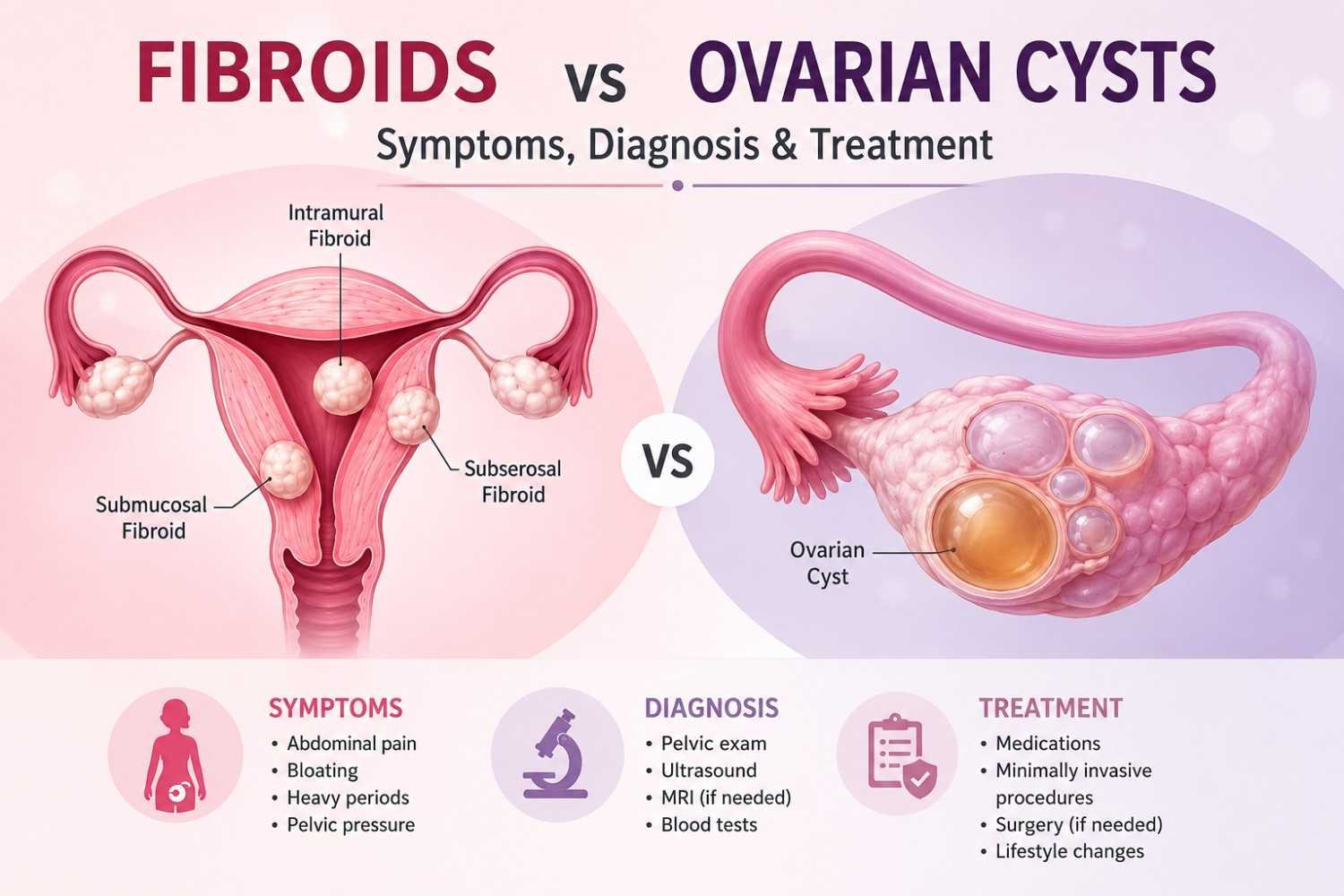
Fibroids, also known as uterine fibroids, are non-cancerous growths that develop within or around the uterus. They consist of muscles and fibrous tissue and tend to occur in older women during their reproductive years.
Fibroids may be small, medium, or large. Some are very small and may be symptomless; others may reach a size that causes problems with the uterus and surrounding organs. When talking about Fibroids vs Ovarian Cysts, an important fact to note is that Fibroids (not Ovarian Cysts) develop in the uterus.
What Are Ovarian Cysts?
Ovarian cysts are sacs of fluid that form on or in the ovary. A number of ovarian cysts develop naturally in the menstrual cycle and go away on their own. But some develop to be large, painful or long-lasting and need medical assessment.
The main difference between fibroids and ovarian cysts is that the latter develop from the muscular wall of the uterus, while fibroids develop from the ovary.
Fibroids vs Ovarian Cysts: Key Differences
Understanding Fibroids vs Ovarian Cysts becomes easier when you compare their characteristics.
Feature | Fibroids | Ovarian Cysts |
Location | Uterus | Ovary |
Structure | Solid muscular tissue | Fluid-filled sac |
Common Age | 30–50 years | Any reproductive age |
Cancer Risk | Rarely cancerous | Mostly benign |
Symptoms | Heavy bleeding, pelvic pressure | Pelvic pain, bloating, irregular periods |
Knowing the difference between a fibroid cyst and an ovarian cyst is essential because their treatment plans differ depending on the diagnosis.
Symptoms of Fibroids and Ovarian Cysts
Women look up ovarian cyst symptoms, as many of these are also fibroid symptoms. Both conditions can give rise to hip pain, but there are important distinctions.
Fibroid Symptoms
- Heavy or prolonged menstrual bleeding
- Pelvic pressure or fullness
- Frequent urination
- Lower back pain
- Constipation
- Pain during intercourse
- Enlarged abdomen
Ovarian Cyst Symptoms
- Sudden or dull pelvic pain
- Abdominal bloating
- Irregular menstrual cycles
- Pain during intercourse
- Pain before or after periods
- Nausea or vomiting (in some cases)
- Feeling of fullness in the lower abdomen
Because these symptoms often overlap, understanding Fibroids vs Ovarian Cysts requires proper medical evaluation rather than self-diagnosis.
How Are Fibroids and Ovarian Cysts Diagnosed?
A doctor’s examination combined with diagnostic imaging provides the most accurate diagnosis.
Pelvic Examination
During a routine pelvic exam, your doctor may detect abnormalities such as an enlarged uterus or ovarian swelling.
Ultrasound Examination
One of the best diagnostic tools is a Pelvic ultrasound for fibroids. In an ultrasound, a doctor can see clearly into the uterus and ovary, and be able to distinguish if the problem is from a fibroid or an ovarian cyst.
Likewise, with Ultrasound for ovarian cysts, it can be used to find the size, location, and type of cysts. It does not cause pain or discomfort and is generally the first imaging test that gynecologists would recommend.
In some cases, when your doctor suggests advanced imaging, MRI or CT may be suggested, but ultrasound is the recommended first-line imaging test.
For reliable imaging services, it is best to go with a trusted Ultrasound in Shalimar Bagh to help ensure that you get your diagnosis and treatment on time. Similarly, one can visit a reputed Diagnostic Centre in Pitampura to avail of experienced radiologists and advanced diagnostic technology.
Fibroid vs Cyst: Which Is More Serious?
When comparing fibroid vs cyst, neither condition is automatically more serious. The severity depends on several factors, including:
- Size of the growth
- Number of fibroids or cysts
- Symptoms experienced
- Risk of complications
- Effect on fertility
- Patient’s age and overall health
Some fibroids don’t cause any symptoms for many years, and some ovarian cysts will go away on their own. Persistent pain, heavy bleeding or rapidly growing masses, however, should always be investigated by a health care professional.
Treatment Options
Treatment depends on the diagnosis, symptoms, and future pregnancy plans.
Fibroid Treatment
- Observation for small, symptom-free fibroids
- Hormonal medications
- Pain relief medication
- Minimally invasive procedures
- Myomectomy
- Hysterectomy in severe cases
Ovarian Cyst Treatment
- Watchful waiting
- Hormonal birth control
- Pain management
- Surgical removal if large or persistent
- Emergency surgery for ruptured or twisted cysts
Understanding Fibroids vs Ovarian Cysts helps patients make informed decisions about treatment after consulting their gynecologist.
When Should You Visit a Doctor?
Seek medical attention if you experience:
- Severe pelvic pain
- Heavy menstrual bleeding
- Sudden abdominal swelling
- Persistent bloating
- Pain during intercourse
- Difficulty urinating
- Irregular periods lasting several months
Early diagnosis significantly improves treatment outcomes and reduces the risk of complications.
Why Ultrasound Is Essential for Early Detection
Ultrasound is an important tool when diagnosing fibroids and ovarian cysts. It is non-invasive, radiation-free, inexpensive, and very accurate for assessing pelvic organs. If your doctor has a suspicion of fibroids or ovarian cysts, it is important to have them checked out on time, so he or she can determine the exact cause of your symptoms and provide you with the best treatment.
Final Thoughts
Understanding the difference between Fibroids and Ovarian Cysts is somewhat important since they can have similar symptoms, and the diagnosis and treatment of these can be quite different. Fibroids usually are solid growths that grow within the uterus, while ovarian cysts are basically fluid – filled pockets that form on the ovaries. If you spot early warning signs correctly and get the proper diagnostic imaging in time, you will catch things early and get towards better outcomes. Repeated pelvic pain or any bleeding that seems unusual or just bloating for that matter, is a good sign that you should contact your health care professional as soon as possible. Additionally, a good diagnostic center that provides a modern ultrasound service will provide a more reliable diagnostic result and assist you in obtaining appropriate treatment at the proper time.