
The Importance of Regular Health Screenings
OnePLUS Ultrasound Lab2026-08-17T06:09:16+00:00Being healthy means being free of illness now; it also involves the ability to diagnose any underlying problem in advance, before it turns into something serious. This is when a periodic health check-up comes to use. When seeking an effective Pathology Lab in Pitampura, testing may be included in the process, depending on the results recommended by your doctor.
A screening test is not an indication of an illness; sometimes it is conducted even among patients who do not show any signs of disease. According to the Government of India’s population-based screening programme, the screening test involves conditions like hypertension, diabetes, and some common cancers in individuals above 30 years of age.
Why Regular Health Screenings Matter
Many diseases can come about without you noticing. You will go ahead to work out, travel, and do all that you like while you are still at risk. That is why preventive medicine revolves around detecting some diseases early based on age, risk factors and medical advice.
Call now to schedule your health screening and take a proactive step toward better health.
What Can a Regular Health Check Include
A routine medical examination is not necessarily about ordering every available test. It doesn’t necessarily imply more tests equal good care.
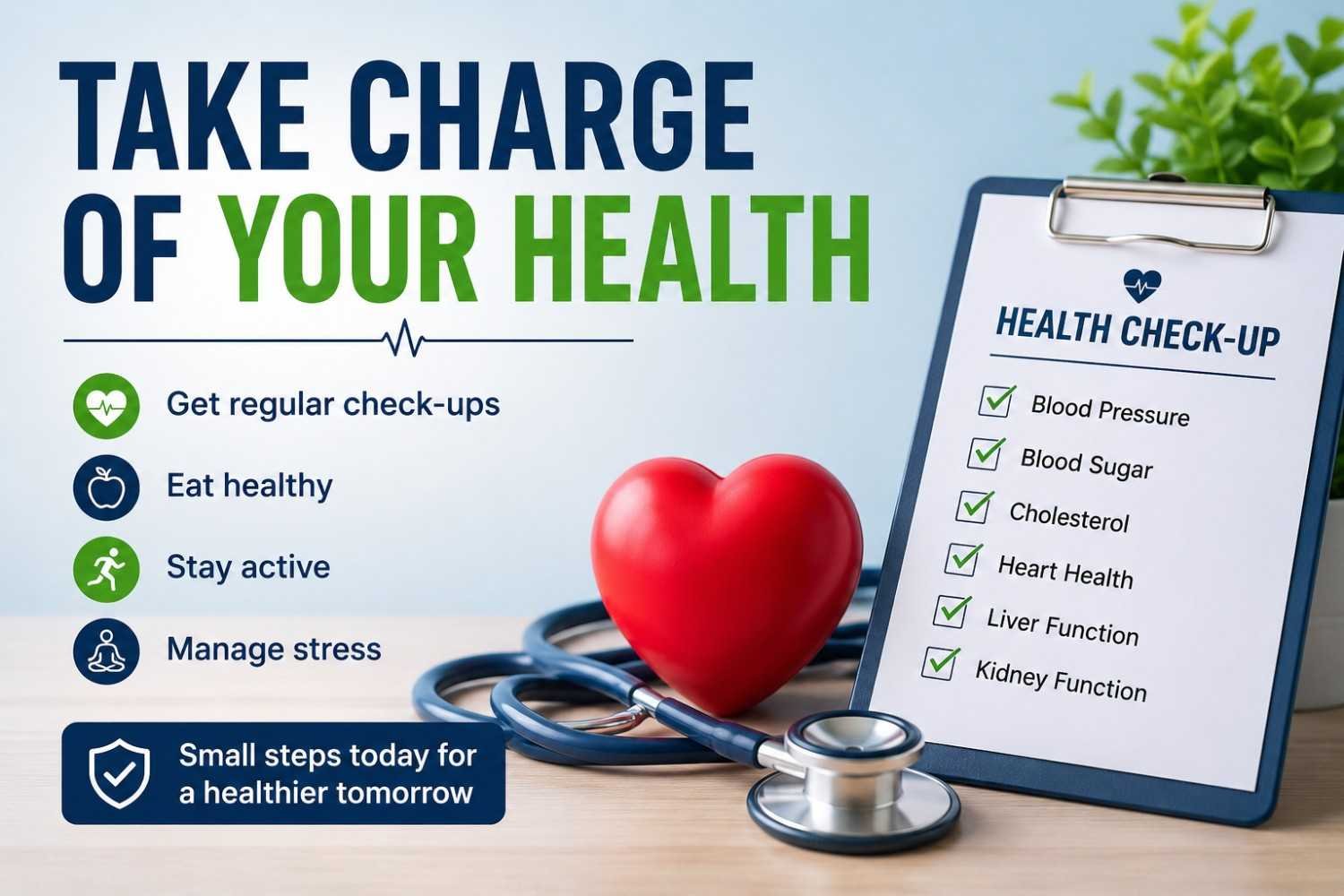
A physician could take into account your age, hereditary factors, lifestyle, current health problems, symptoms or any other risk factor in recommending tests to you. Based on different situations, a health screening can involve measuring blood pressure, taking blood samples for testing, checking blood sugar level and even further tests.
Diagnostic imaging can also be relevant depending on the clinical indication. In such cases as Ultrasound in Rohini, diagnostic imaging can be used to diagnose specific organs or problems.
Common Areas Covered in Preventive Care
Health area | What may be assessed | Why it matters |
Blood pressure | Blood pressure readings | Helps identify hypertension |
Blood glucose | Glucose or HbA1c, when appropriate | Helps assess diabetes risk |
Blood tests | Selected laboratory markers | Can provide useful health information |
Cancer screening | Age- and risk-based screening | Can support early detection |
Lifestyle factors | Diet, activity, tobacco and alcohol use | Helps identify preventable risks |
Mental well-being | Symptoms and risk assessment | Supports broader healthcare |
The exact tests and frequency should come from a qualified healthcare professional. Screening recommendations vary according to age, sex, personal history and risk factors.
Early Detection Can Make a Difference
Early detection forms one of the best arguments in support of screening procedures. According to the World Health Organization, screening programs may detect certain diseases or precancerous states before symptoms appear, thus giving an opportunity to diagnose and treat patients at the right time.
Nevertheless, screening cannot be treated as a crystal ball. A test can have abnormal results, and not all tests are fit for everyone. Additionally, WHO emphasizes the existence of negative consequences of screening that emerge from improper use.
In other words, screen wisely, not blindly.
Regular Checkup vs Waiting for Symptoms
There is a major difference between preventive screening and testing because something feels wrong.
Preventive approach | Symptom-based approach |
Focuses on health risks and prevention | Focuses on an existing concern |
May identify some conditions before symptoms | Usually starts after symptoms appear |
Uses age and risk factors to guide screening | Tests may target a specific problem |
Supports long-term health monitoring | Helps investigate a current complaint |
This does not mean you should ignore symptoms just because your last checkup was normal. A normal screening result does not guarantee that every health problem is absent.
Who Should Consider Regular Screening
The appropriate time schedule varies among individuals. Age is just one of the considerations involved.
Your physician could take into account:
- Age and gender
- Family health history
- Any current health problems
- Weight and lifestyle factors
- Smoking and drinking habits
- Results of past screenings
- Any symptoms or physical findings
- Individual risk factors
Population-based screening for adults over 30 years for hypertension, diabetes and selected cancers has been included in India’s Ministry of Health and Family Welfare national program.
It does not follow that everyone requires the same tests at any point in time.
Make Your Health Monitoring More Meaningful
Your wellness checkup will become much more helpful when you preserve all your old reports and share any changes with your doctor. Healthcare professionals will have more information to analyze than just your test results.
When using Pathology Lab in Pitampura for the suggested laboratory tests, organize your reports properly. It is an easy thing to do, but it might be very helpful in the future.
When searching for the Ultrasound in Rohini, it will also be important to choose the type of scan and see if this place offers it.
Google Business Profile of OnePLUS Ultrasound Lab can help you find the address of this lab.
A Healthy Lifestyle Still Matters
Health screening goes best hand in hand with a healthy way of living. This includes physical activity, balanced diet, sufficient rest, avoidance of smoking, and moderate consumption of alcohol.
Screening should not become an excuse to live on junk food and then make deals with your blood tests. The body does not care too much about such deals.
Consider screening as a source of information. The most important thing is what you do with the information you have obtained.
How to Prepare for Your Next Checkup
Prior to a regular medical examination, maintain a history of your previous tests and medicines. Consult as to whether you have to abstain from food prior to taking any test through the blood. Observe the instructions issued by the laboratory rather than following social media or a neighbor who has become an instant expert on medicine through a few video observations.
For laboratory tests if suggested by the doctor, a Pathology Lab in Pitampura may be chosen for the purpose. For imaging, please observe the instructions provided to you.
Read Your Reports Without the Usual Confusion
A report is just the beginning. Making sense of all those numbers in your specific case is also very important.
Learn more about laboratory reports from our blog, “How to Understand Blood Test Results Without Medical Confusion.” This will help you interpret common terms used in reports without diagnosing a number.
Your Health Deserves Regular Attention
Health screening involves a proactive rather than reactive effort when it comes to health problems. A good health assessment can assist in identifying some risks in advance as well as give you more information to guide you in future healthcare decisions.
The key here is not to run all the health tests. The best practice would be to have the necessary screening done according to your age, your medical history and risks, if any, with the guidance of a medical expert. Both the government health programs and international recommendations for screening promote targeted screening rather than testing for everything.
Take the first step toward better health, schedule your recommended checkup and discuss the right screening tests with your healthcare professional today.