What Is Air Pollution?
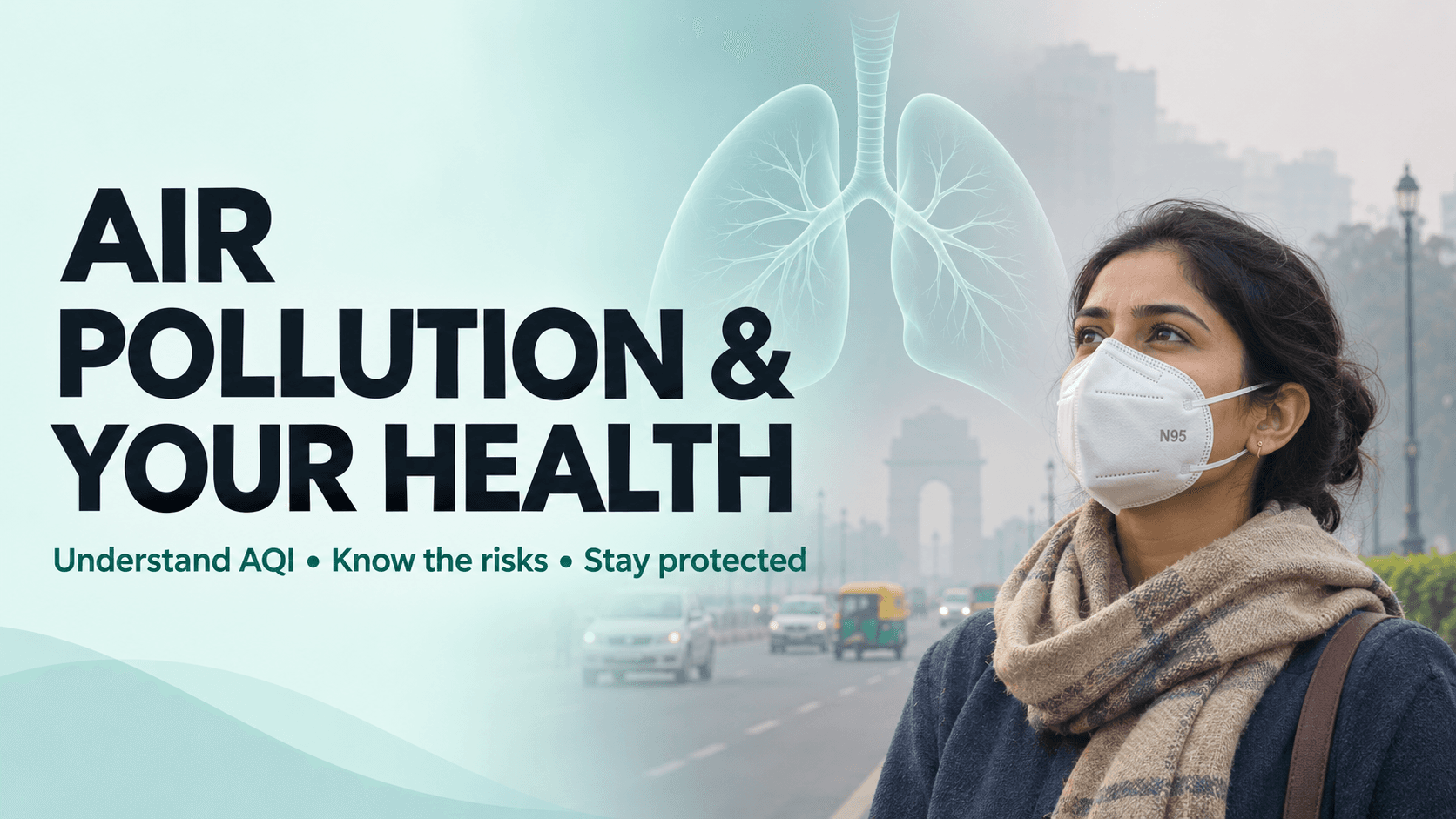
Air pollution means harmful particles, gases or other substances in indoor or outdoor air that can affect human health. It can be visible as smog or smoke, but harmful pollutants may also be present when the air looks clear.
Common sources include vehicles, household cooking and heating fuels, power generation, industry, agriculture, waste burning and construction dust.
Pollutants of major public-health concern include:
- PM2.5: Fine particulate matter measuring 2.5 micrometres or less, capable of reaching deep into the lungs.
- PM10: Inhalable particles measuring 10 micrometres or less, including some dust and other airborne particles.
- Nitrogen dioxide (NO₂): A gas produced mainly by combustion, including traffic and fuel burning.
- Sulphur dioxide (SO₂): A gas produced particularly by burning sulphur-containing fuels and some industrial processes.
- Ground-level ozone (O₃): A pollutant formed through chemical reactions involving sunlight and other air pollutants.
Understanding the Air Quality Index (AQI)
The Air Quality Index gives the public a simplified indication of outdoor air quality and potential health concerns. In India, the Central Pollution Control Board (CPCB) uses the following categories:
- 0–50 — Good: Minimal impact.
- 51–100 — Satisfactory: Minor breathing discomfort in particularly sensitive people.
- 101–200 — Moderate: Breathing discomfort may occur in people with lung or heart disease, children and older adults.
- 201–300 — Poor: Breathing discomfort on prolonged exposure; greater concern for people with heart or lung disease.
- 301–400 — Very Poor: Respiratory illness or symptoms may increase with prolonged exposure.
- 401–500 — Severe: Health effects may affect healthy people and be more serious in people with existing disease.
Important: Higher AQI generally means greater pollution-related concern, but AQI is not an individual risk score. It combines information about pollutants and can conceal differences between them. People with existing conditions may experience symptoms even below the “severe” category.
Can AQI go above 500?
India's official National Air Quality Index classifies air quality into six categories, with Severe (401–500) being the highest category. However, pollution levels can continue to rise beyond the concentrations represented by this scale.
Some air-quality applications may display values above 500 because they use different or extended calculation methods. It is also important to distinguish AQI values from individual pollutant concentrations, such as PM2.5, which are measured in micrograms per cubic metre (µg/m³).
An AQI reading of 500 does not mean pollution cannot get worse. During extreme pollution episodes, people should follow official health advisories, minimise unnecessary exposure, and take particular care if they have existing respiratory or cardiovascular conditions.
How Does Air Pollution Affect Your Health?
Air pollution can cause short-term symptoms and contribute to long-term illness. Risks depend on the pollutant, concentration, duration of exposure, and individual susceptibility. Its effects extend beyond the lungs.
Respiratory health
Polluted air can cause coughing, throat irritation, wheezing and shortness of breath. It may worsen asthma and chronic obstructive pulmonary disease (COPD). Long-term exposure is associated with impaired lung function and chronic respiratory illness.
Heart and blood vessels
Exposure to air pollution is associated with increased risks of heart disease and stroke. High-pollution episodes may trigger cardiovascular problems in susceptible people. Individuals with hypertension, diabetes or existing heart disease should take particular care.
Children
Exposure can worsen respiratory symptoms and asthma and may affect lung development.
Older adults
Older adults, especially those living with heart or lung disease, may experience worsening symptoms during high-pollution periods.
Who may be at higher risk?
Groups needing particular attention include children, pregnant women, older adults, people with existing respiratory or cardiovascular disease, and outdoor workers such as traffic personnel, construction workers and street vendors. Some people are more susceptible to harm; others face greater exposure because of where they live or work.
How Can You Protect Yourself From Air Pollution?
Reducing pollution at its source is the most effective long-term public-health solution.
1. Check local air quality and plan activities
Use reliable local AQI reports and public-health advisories when planning outdoor activities. If pollution is high, adjust the time, location or duration of outdoor exposure where practical, especially if you are in a higher-risk group.
2. Keep physically active, with sensible adjustments
Regular exercise has important health benefits and should not be abandoned simply because air quality is imperfect. During high-pollution episodes, choose a less polluted route, adjust exercise timing, or use a cleaner indoor location. People with asthma, COPD, heart disease and other vulnerabilities should consider reducing moderate-to-vigorous outdoor activity during such episodes and follow medical advice.
3. Consider indoor air quality, not simply staying indoors
Indoor air is not necessarily clean. Tobacco smoke, cooking fumes, incense and other sources can increase indoor pollution, while outdoor pollutants may enter buildings. During acute outdoor pollution episodes, temporarily closing windows may help in some settings, but indoor ventilation and safe temperature must still be considered. Ventilate when outdoor conditions improve and avoid unnecessary indoor smoke. Damp mopping or wiping helps avoid resuspending settled dust.
4. Understand the role and limits of air purifiers
A properly selected and maintained portable air cleaner with effective particle filtration may reduce indoor PM2.5. Performance varies with room size, air exchange, indoor sources and filter maintenance. Air filtration may be considered for selected people with serious pre-existing conditions, taking cost and maintenance into account. Avoid devices that deliberately generate ozone.
5. Continue treatment for existing conditions
If you have asthma, COPD, heart disease, hypertension or diabetes, take prescribed medication as directed and follow your clinician’s management plan. Seek advice if symptoms worsen or reliever medication is needed more often than usual.
6. Maintain everyday health habits
Balanced nutrition, sufficient sleep, avoiding tobacco smoke and regular activity in a cleaner environment support health.
Key message: Reducing air pollution at its source is the strongest long-term protection. Until air quality improves, feasible steps to reduce personal exposure can help, especially for vulnerable people. The responsibility for clean air must not rest on individuals alone. Cleaner energy and transport, emission control, sound urban planning and improved waste management require action from governments, industries and communities.
When Should You Consult a Doctor?
Consult a healthcare professional if you have persistent cough or throat irritation, recurrent wheezing, new or worsening breathlessness, increased need for prescribed asthma-relief medication, or respiratory symptoms that disrupt sleep or daily activities.
Seek emergency medical attention: Severe breathing difficulty, persistent chest pain, fainting, significant confusion, sudden weakness on one side of the body or difficulty speaking require urgent assessment. Do not assume these symptoms are caused only by pollution.
When Are Medical Tests Needed for Air Pollution-Related Health Problems?
Air pollution can aggravate existing respiratory and cardiovascular conditions. However, there is no routine blood test that can determine how much air pollution has affected a person's health.
Medical investigations may be advised when someone develops persistent symptoms, experiences worsening of an existing condition, or has other risk factors requiring evaluation. The choice depends on symptoms, clinical examination, medical history and the treating doctor's assessment.
- Complete Blood Count (CBC) may help evaluate suspected anaemia or infection when clinically indicated. It does not diagnose pollution-related lung damage.
- Chest X-ray may be recommended for persistent cough, breathlessness or suspected lung disease after clinical evaluation. The linked catalog entry is a PA view; your clinician should specify the appropriate view.
- Pulmonary Function Test (Spirometry) helps assess airflow limitation and may be recommended in patients with suspected asthma or COPD.
- Electrocardiogram (ECG) may be appropriate for patients experiencing chest discomfort, palpitations or other suspected cardiac symptoms.
- Echocardiography (ECHO) may be advised when structural or functional heart disease is suspected. The linked catalog entry is adult 2D and M-mode echocardiography.
- Blood Sugar / HbA1c helps assess or monitor diabetes in patients who have diabetes or meet screening criteria, rather than measuring pollution exposure. See the available fasting blood sugar test, random blood sugar test and HbA1c test; a clinician can advise which is appropriate.
Important: These investigations are not routinely required simply because a person lives in a polluted environment. They should be performed based on clinical indications and medical advice.
For severe chest pain, acute breathing difficulty or stroke symptoms, emergency care should take priority over visiting a diagnostic laboratory. Medical investigations can play an important role in evaluating respiratory and cardiovascular symptoms when recommended by a qualified healthcare professional.
Diagnostic Services at OnePLUS Ultrasound Lab
Air pollution can aggravate existing respiratory and cardiovascular conditions. When symptoms persist or an underlying health condition is suspected, a doctor may recommend diagnostic investigations.
At OnePLUS Ultrasound Lab in Pitampura, Delhi, we offer diagnostic services including Chest X-rays, Complete Blood Count (CBC), ECG, Echocardiography (ECHO) and other laboratory investigations.
These tests do not directly measure the effects of air pollution on the body. Their purpose is to help healthcare professionals evaluate symptoms and identify or monitor underlying medical conditions when clinically indicated.
To learn more, explore our diagnostic tests and packages or contact OnePLUS Ultrasound Lab for information about available investigations.
Conclusion
Air pollution is an important health risk for people of all ages. Understanding the AQI, recognising symptoms and reducing exposure when feasible can help, but meaningful long-term protection depends on coordinated action to reduce emissions and improve air quality for everyone.
Medical Disclaimer
This article is for general health education and does not replace diagnosis, treatment or personal medical advice. People with symptoms or existing medical conditions should consult a qualified healthcare professional.
References
- World Health Organization (2024). Air pollution: Personal interventions and risk communication.
- World Health Organization. Ambient (outdoor) air pollution.
- Central Pollution Control Board. National Air Quality Index (India).
- United States Environmental Protection Agency. Indoor air quality and air cleaners.